




 Dubai Neighbourhoods
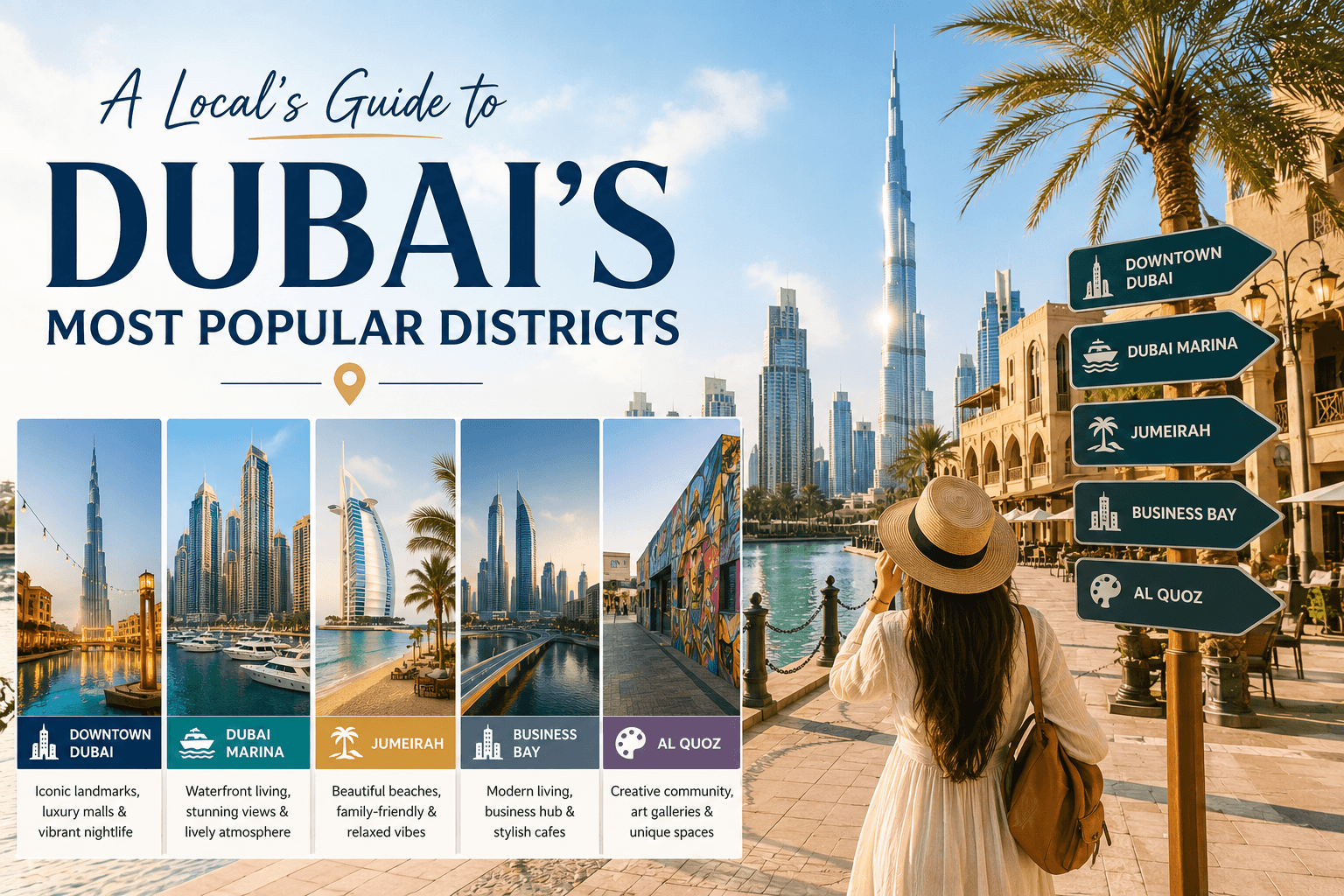
Dubai houses over three million people in a sweeping urban expanse where modern steel towers overshadow century-old clay quarters. Navigating these roads requires native familiarity. This is why A Local’s Guide to Dubai’s Most Popular Districts serves as the definitive manual for reading the local geography.
Every neighborhood operates on its own unique social wavelength, rental budget, and community network. Referencing A Local’s Guide to Dubai’s Most Popular Districts helps newcomers sidestep overpriced tourist traps and walk the streets like seasoned residents.
Deciphering these residential zones is key when deciding where to sign a lease or invest capital.
Why You Need A Local’s Guide to Dubai’s Most Popular Districts
The city covers thousands of square kilometers of desert and concrete, making local geography a major factor in daily sanity. Rush-hour highway bottlenecks easily turn a ten-minute drive into a grueling hour-long crawl if you pick the wrong starting point.
Your choice of address dictates your yearly expenses, transit times, and proximity to the metro rail. This breakdown offers hard numbers on travel connections, median rent prices, and lifestyle quirks across different zones.
Exploring the Top Areas with A Local’s Guide to Dubai’s Most Popular Districts
Moving through this fast-paced emirate is easier when you look closely at its leading neighborhoods. Each enclave offers a different way of life, matching different bank accounts and daily habits.
Downtown Dubai: The Busy City Center
Downtown Dubai is the busy core of the emirate, anchored by the Burj Khalifa and the sprawling Dubai Mall. The neighborhood draws wealthy residents and professionals who need to be near the financial offices. The streets feature upscale high-rise homes, walkable pavements, and high-end dining spots.
- The Burj Khalifa and its dancing fountains, which draw huge crowds every evening.
- The Dubai Mall, featuring over 1,200 shops and a giant indoor aquatic tank.
- Sheikh Mohammed bin Rashid Boulevard, lined with high-end eateries and outdoor cafes.
Living here requires a hefty budget, with starting prices for one-bedroom flats hovering around 110,000 AED annually. The heavy corporate presence makes it excellent for executives but far too busy for anyone wanting quiet suburban life.
Dubai Marina and JBR: Coastal Living
Dubai Marina and Jumeirah Beach Residence offer a lively coast-side lifestyle defined by towering residential skyscrapers and a busy promenade. According to A Local’s Guide to Dubai’s Most Popular Districts, this stretch is a favorite for European expats and runners who love the beach paths. The marina canal itself is a three-kilometer canal packed with yachts and dining spots.
- The Beach at JBR, offering public shore access and open-air retail spots.
- Dubai Marina Mall, providing simple shopping and quick dining options for nearby residents.
- The local tram network, linking up directly with the main metro line.
Weekend traffic gets incredibly congested here as crowds gather for leisure. Residents enjoy beautiful water views but must time their departures carefully to avoid gridlock.
Palm Jumeirah: Island Luxury
Palm Jumeirah is a massive engineering feat that extends into the sea in the shape of a palm tree. This artificial island features high-end villas, luxury hotels, and private shore clubs. Residents enjoy a relaxed beach lifestyle with constant security and private sand access.
- Palm West Beach and Nakheel Mall, offering high-end dining and shopping spots.
- Atlantis, The Palm, which stands as a landmark hotel and entertainment park.
- The Palm Monorail, linking the island straight to the mainland trains.
Homes here carry some of the steepest prices in the region, with villa rents frequently topping 600,000 AED per year. The island offers quiet seclusion, but residents rely on a single gateway road that slows down during major holidays. Mentioning this in A Local’s Guide to Dubai’s Most Popular Districts prepares you for the occasional commute bottleneck.
Old Dubai and Al Fahidi: Traditional Heritage
Old Dubai, covering Deira, Bur Dubai, and Al Bastakiya, stands in sharp contrast to the high-rises. Consulting A Local’s Guide to Dubai’s Most Popular Districts reveals the most genuine historical spots and souks where you can find gold, spices, and fabrics at great prices.
- Al Fahidi Historical Neighborhood, showing restored wind-tower buildings from the late nineteenth century.
- The Dubai Creek, where old wooden ferry boats carry passengers for just one dirham.
- The Gold Souk, housing hundreds of shops that trade certified precious metals.
Rents in these older quarters are much lower, making them highly accessible for budget-focused renters. The trade-off means dealing with older building plumbing and limited public parking spaces.
Summary of A Local’s Guide to Dubai’s Most Popular Districts
Choosing the right neighborhood depends on your daily schedule, budget limits, and office location. Downtown Dubai provides fast business access, while the Marina offers a coastal escape. Old Dubai remains the cultural anchor, offering affordable living and rich history.
This comparison from A Local’s Guide to Dubai’s Most Popular Districts helps you choose the right base. Using these tips ensures you spend your housing budget wisely.
| District | Average 1-Bed Rent (AED/yr) | Main Atmosphere | Metro Access |
|---|---|---|---|
| Downtown Dubai | 110,000 – 160,000 | Upscale Business | Excellent |
| Dubai Marina | 100,000 – 150,000 | Waterfront Leisure | Excellent |
| Palm Jumeirah | 160,000 – 260,000 | Resort Luxury | Moderate |
| Old Dubai | 45,000 – 75,000 | Heritage & Trade | Good |
Navigating this fast-changing city becomes simple when you refer to A Local’s Guide to Dubai’s Most Popular Districts to map out your journey. Choosing a home near train lines will drastically cut down your daily travel times.
Balancing your budget between modern luxury and cultural history ensures a well-rounded stay. Understanding the unique character of each neighborhood guarantees a successful stay in this global center.


Comments are closed