




 Brunches in Dubai
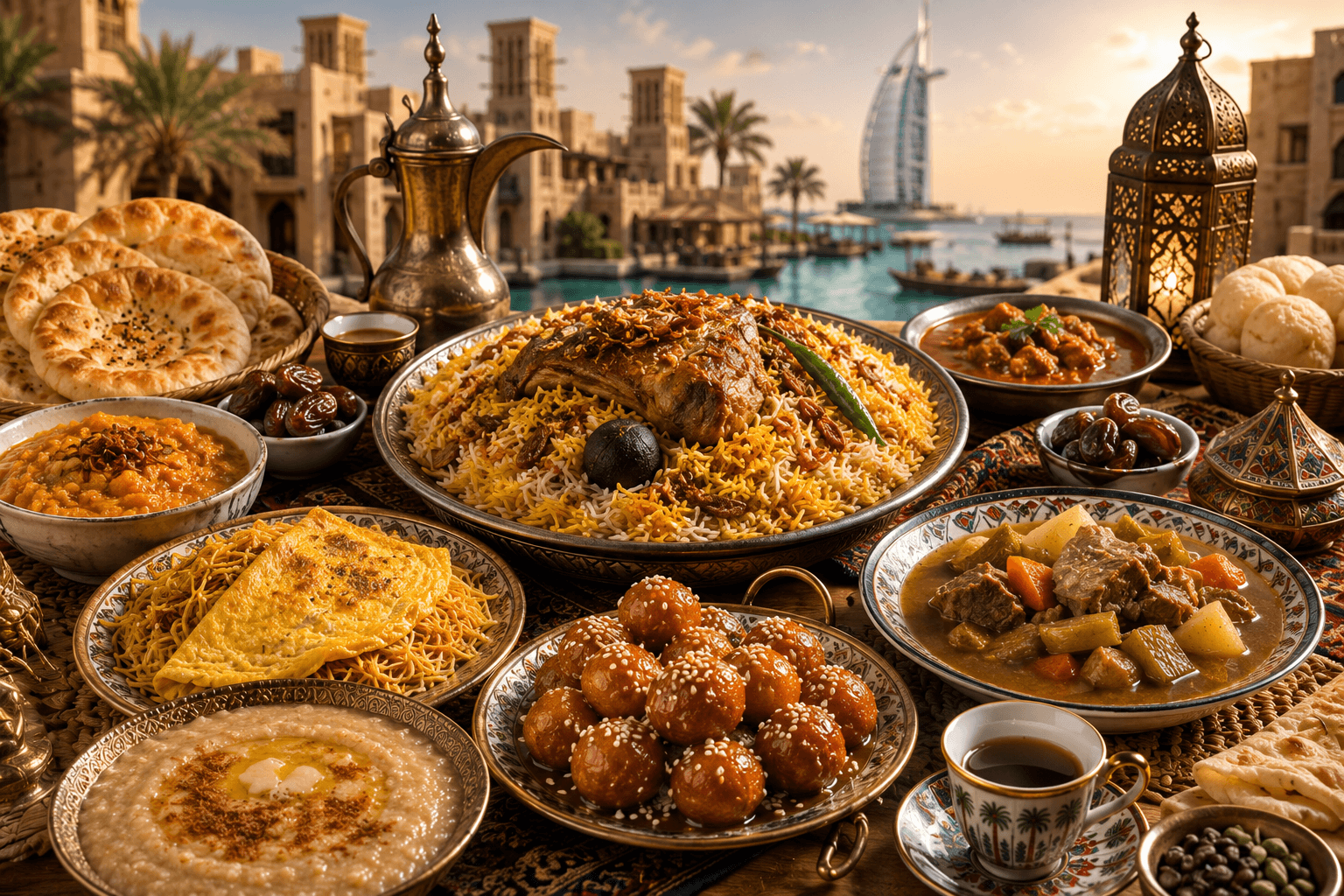
Dubai is a global culinary destination, but one of the best ways to experience the city’s rich heritage is through authentic Emirati cuisine. Influenced by Bedouin traditions, Arabian flavors, Persian spices, and fresh ingredients from the Gulf, Emirati food is both comforting and flavorful. From fragrant rice dishes to sweet desserts and aromatic coffee, every meal tells a story of the UAE’s history, hospitality, and culture.
If you’re visiting Dubai, make sure these traditional Emirati dishes are on your must-try list.
Why Try Emirati Cuisine?
Food plays an important role in Emirati culture, bringing families and communities together during celebrations, religious festivals, and everyday meals. Traditional recipes have been passed down through generations, combining locally sourced ingredients with spices traded along ancient maritime routes.
Sampling local dishes gives visitors a deeper appreciation of the country’s traditions and way of life.
1. Machboos
Machboos is one of the UAE’s most famous national dishes. It features fragrant rice cooked with aromatic spices such as saffron, cardamom, cinnamon, and dried lime, served with tender chicken, lamb, seafood, or beef.
The slow-cooked meat and richly seasoned rice create a hearty meal that perfectly represents Emirati home cooking.
2. Harees
A popular dish during Ramadan and festive occasions, Harees is made from wheat and slow-cooked meat that is simmered for hours until it reaches a smooth, creamy consistency.
Despite its simple ingredients, Harees is incredibly comforting and showcases the traditional cooking techniques of the region.
3. Thareed
Often described as the Middle Eastern version of a stew, Thareed combines vegetables, meat, and rich broth served over freshly baked flatbread. The bread absorbs the flavorful sauce, creating a delicious and satisfying meal.
This dish has long been a favorite among Emirati families.
4. Balaleet
Balaleet offers a unique combination of sweet and savory flavors. Sweet vermicelli noodles flavored with saffron, cardamom, and sugar are topped with a light omelet, making it a popular breakfast dish throughout the UAE.
Visitors are often surprised by its distinctive yet delicious taste.
5. Luqaimat
No culinary journey through Dubai is complete without trying Luqaimat. These crispy golden dumplings are soft on the inside and are traditionally drizzled with date syrup or honey before being sprinkled with sesame seeds.
They are especially popular during Ramadan and local festivals.
6. Madrooba
Madrooba is a creamy dish made by cooking fish or chicken with rice, spices, garlic, and herbs until everything blends into a rich, comforting texture.
Its mild yet flavorful taste makes it popular among both locals and visitors.
7. Grilled Gulf Seafood
Dubai’s coastal location means fresh seafood is an important part of Emirati cuisine. Grilled hammour, kingfish, prawns, lobster, and shrimp are often seasoned with local spices and served alongside fragrant rice or fresh salads.
Seafood lovers will find plenty of delicious options throughout the city.
8. Chebab
Chebab is a traditional Emirati pancake made with saffron and cardamom, often served warm with cheese, date syrup, or honey. It is commonly enjoyed for breakfast or as an afternoon snack with Arabic coffee.
9. Khameer Bread
Khameer is a soft, slightly sweet bread flavored with saffron and dates. Freshly baked and served with cheese, honey, or traditional stews, it remains a staple in many Emirati households.
Its fluffy texture makes it perfect for sharing during family meals.
10. Arabic Coffee (Gahwa) and Dates
No visit to Dubai is complete without experiencing traditional Emirati hospitality. Guests are warmly welcomed with Arabic coffee, known as Gahwa, accompanied by fresh dates.
Prepared with lightly roasted coffee beans, cardamom, and sometimes saffron, Gahwa symbolizes generosity and friendship throughout the UAE.
Traditional Emirati Desserts
If you have a sweet tooth, don’t miss these local favorites:
- Luqaimat
- Balaleet
- Date cakes
- Saffron puddings
- Honey pastries
- Sesame sweets
- Traditional biscuits
- Fresh dates
These desserts perfectly complement a traditional Emirati meal.
Where to Enjoy Authentic Emirati Food
Visitors can experience traditional Emirati cuisine in:
- Heritage restaurants
- Cultural centers
- Traditional cafés
- Desert camps
- Luxury hotels offering Emirati menus
- Local family-owned restaurants
- Food festivals
- Cultural events
Dining in heritage settings often enhances the overall cultural experience.
Dining Etiquette in Emirati Culture
Understanding local dining customs adds meaning to your culinary journey:
- Accept Arabic coffee when offered as a sign of hospitality.
- Wash your hands before eating.
- Traditionally, meals may be shared from large serving platters.
- Use your right hand when eating if dining in a traditional setting.
- Show appreciation to your host after the meal.
These customs reflect the warmth and generosity of Emirati culture.
Best Time to Explore Emirati Cuisine
Traditional dishes are available year-round, but visitors can enjoy an even wider variety during cultural festivals, Ramadan evenings, heritage celebrations, and seasonal food events.
Many restaurants also offer special tasting menus featuring multiple local specialties.
Tips for Food Lovers
- Try several dishes instead of ordering just one.
- Pair meals with Arabic coffee or fresh juices.
- Visit traditional restaurants for authentic recipes.
- Ask staff about the history of each dish.
- Save room for local desserts.
- Explore food markets for regional specialties.
- Respect local customs during Ramadan.
Final Thoughts
Authentic Emirati cuisine is much more than delicious food—it is a celebration of the UAE’s rich history, traditions, and hospitality. From fragrant Machboos and comforting Harees to sweet Luqaimat and aromatic Arabic coffee, every dish offers visitors a taste of Dubai’s cultural heritage. Whether you’re dining in a traditional heritage restaurant, enjoying a desert feast, or sampling local delicacies at a cultural festival, exploring Emirati cuisine is an unforgettable part of any visit to Dubai. No trip to the city is truly complete without experiencing these authentic flavors that have been cherished for generations.


Comments are closed